Abington Superior Roofing provides roof inspection in Abington, PA for homeowners, buyers, sellers and building owners, serving surrounding cities including Lower Moreland, Upper Southampton, East Goshen, Warwick Township and Plymouth Township. After more than 20 years of repairing and replacing roofs here, we know where the roofs in this area tend to fail, and that is where an inspection should look hardest.
Our inspections start in the attic, not on the ladder. The underside of the decking shows staining, soft spots, frost and daylight that no one can see from the shingles, and it tells us which outside details to examine closely. Then we walk the roof where it is safe, check every flashing and penetration, and look at the gutters and the edges.
You receive a written report with photos, a clear separation between what needs attention now and what can wait, and an honest view of how much life the roof has left. If repair is the right answer, the report says so plainly.
Residential Roof Inspection
Shingle Wear, Granule Loss and Sealing
Asphalt shingles age in predictable ways: granules wash into the gutters, edges curl or cup, tabs crack and the seal strips stop holding. We look at every slope, because the south and west faces usually wear out years before the north side does.
We also lift a few tabs carefully to see whether the shingles still bend and seal or have turned brittle. That single test says more about remaining life than the roof’s age does, and it decides whether future repairs are practical or whether the shingles will crack when someone tries.
Flashing, Pipe Boots and Penetrations
Most leaks begin at a detail, not in the open field of shingles. We examine step flashing at walls and dormers, chimney counter flashing, valley metal, skylight curbs and every plumbing and exhaust vent. Cracked rubber pipe boots are among the most common findings.
Where flashing has been caulked over rather than replaced, we note it, because roofing cement hides a problem for a season and then fails. The report shows each detail so you can see the difference between a sound flashing and one living on borrowed time.
Attic Decking, Insulation and Ventilation
From inside the attic we look for water staining on rafters and sheathing, delaminating plywood, rusted nail tips, mold and compressed or wet insulation. These are the signs of slow leaks and moisture that the outside of the roof may never show.
We also check the balance between soffit intake and ridge or roof exhaust. A poorly ventilated attic cooks shingles in summer and builds frost and ice dams in winter, and the report explains whether ventilation is part of the problem.
Roof Inspections When Buying or Selling
Preparing the Seller Disclosure
Pennsylvania’s seller property disclosure statement asks about the roof’s age, leaks and repairs. Sellers who know the roof’s condition before listing can answer those questions accurately and fix small items before a buyer finds them.
Our report gives you documented facts to work from instead of guesses. If repairs are needed, we can complete them before the house goes on the market and provide the paperwork, which tends to settle a buyer’s questions quickly.
Following Up on a Buyer’s Home Inspection
A general home inspection often flags the roof with a cautious line recommending evaluation by a roofer. Buyers then need a real answer quickly, during a short contingency window. We inspect the roof in detail and tell you what the flagged items actually mean.
Sometimes the answer is a minor repair, and sometimes it is a roof near the end of its life. Either way, you get a written, photographed report you can use in negotiating with the seller instead of a vague worry.
No Township Check at Resale in Abington
Abington Township does not require a use and occupancy permit for the resale of residential, non-business properties, and buyers are responsible for their own inspections. That means no township inspector looks at the roof when a house changes hands.
For buyers, an independent roof inspection is the only check the roof gets before closing. For sellers, it is the way to know what a buyer’s inspector is likely to raise before the conversation starts.
Commercial and Low-Slope Roof Inspection
Membranes, Seams and Blisters
Modified bitumen, EPDM and TPO roofs fail slowly at seams, laps and blisters, and leaks often travel along the deck before showing inside. We walk the membrane, probe seams, and look for splits, shrinkage and areas where the surface feels soft underfoot.
Soft areas usually mean wet insulation, which reduces energy performance and can rot the deck. The report marks those areas on a simple plan so repairs can be targeted rather than guessed.
Drains, Scuppers, Parapets and Edge Metal
Water has to leave a low-slope roof quickly, so clogged drains and scuppers are a priority finding. We also check parapet flashing, coping and edge metal, where wind and movement open joints over time.
Rooftop equipment curbs and pipe penetrations get the same attention, along with any paths worn by service technicians. These are the details that cause most commercial roof leaks, and they are inexpensive to correct early.
Scheduled Inspections for Building Owners
Building owners and property managers benefit from regular inspections rather than waiting for a tenant to report a leak. A spring and fall visit catches storm damage, clogged drains and opening seams before they reach the interior.
Each visit produces a dated report with photos, which builds a record of the roof’s condition over time. That record helps with budgeting for eventual replacement and with any warranty or insurance questions.
Storm Inspections and Documentation
Checking for Wind and Hail Damage
After a windstorm we look for missing, lifted and creased shingles, broken seal strips and damaged ridge caps. After hail we check for bruised shingles, granule loss in circular patterns, and dents in vents, flashing and gutters.
Some storm damage is obvious from the ground and some is not. A close inspection soon after the storm separates new damage from older wear, which matters for any claim you decide to file.
Photos and Notes for Your Own Claim
If you file a claim, the photographs and written notes from our inspection give you and the insurance adjuster a clear record. We can meet the adjuster on site when you ask and point out what we documented.
We do not negotiate or interpret your claim, which in Pennsylvania only you, your insurer or a licensed public adjuster may do. Our role is to document the roof accurately and repair it properly.
Our Step-by-Step Roof Inspection Process
Step 1: Ground, Gutters and Exterior Walk
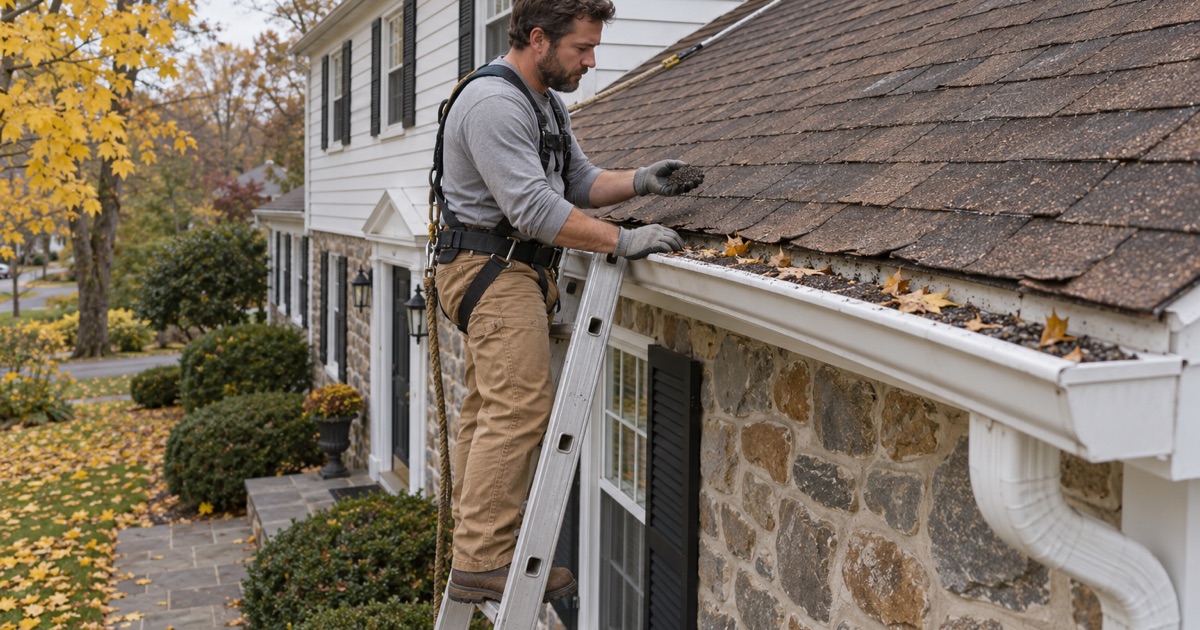
We start by walking around the house, looking at the roof lines, gutters, downspouts, fascia and any staining on the walls. Granules in the gutters and sagging rooflines are early clues about where to look.
Step 2: Attic Inspection
Inside, we check the decking, rafters, insulation and ventilation with a bright light and a careful eye. What we find here tells us which outside areas need the closest look.
Step 3: Roof Surface and Flashing
On the roof we examine shingles or membrane, every flashing detail and every penetration, photographing each finding. Steep and slate roofs are inspected from staging or roof ladders with fall protection.
Step 4: Written Photo Report
You receive a report that sorts findings into items needing attention now and items to watch. It includes photos, an honest estimate of remaining roof life, and repair prices if you want them.
- 20+ Years in Roofing
- Free Written Estimates
- Line-by-Line Scopes