Abington Superior Roofing provides commercial roofing in Abington, PA for storefronts, offices, churches, mixed-use buildings and apartment houses, serving surrounding cities including Lower Moreland, Upper Southampton, East Goshen, Warwick Township and Plymouth Township. With more than 20 years of roofing in this area, we repair, inspect and replace the low-slope roofs that most small commercial buildings depend on.
Commercial roofs fail differently from houses. Water moves slowly on a low slope, leaks travel under the membrane, and problems hide at drains, parapets and rooftop equipment until a tenant reports a stain. Our work starts with finding the real condition of the roof, including the insulation underneath, before recommending anything. Every proposal separates tear-off, insulation, membrane, flashing, edge metal and drainage into their own lines, so owners and property managers can budget accurately and compare bids on equal terms.
Low-Slope Roofing Systems We Install
TPO Single-Ply Membrane
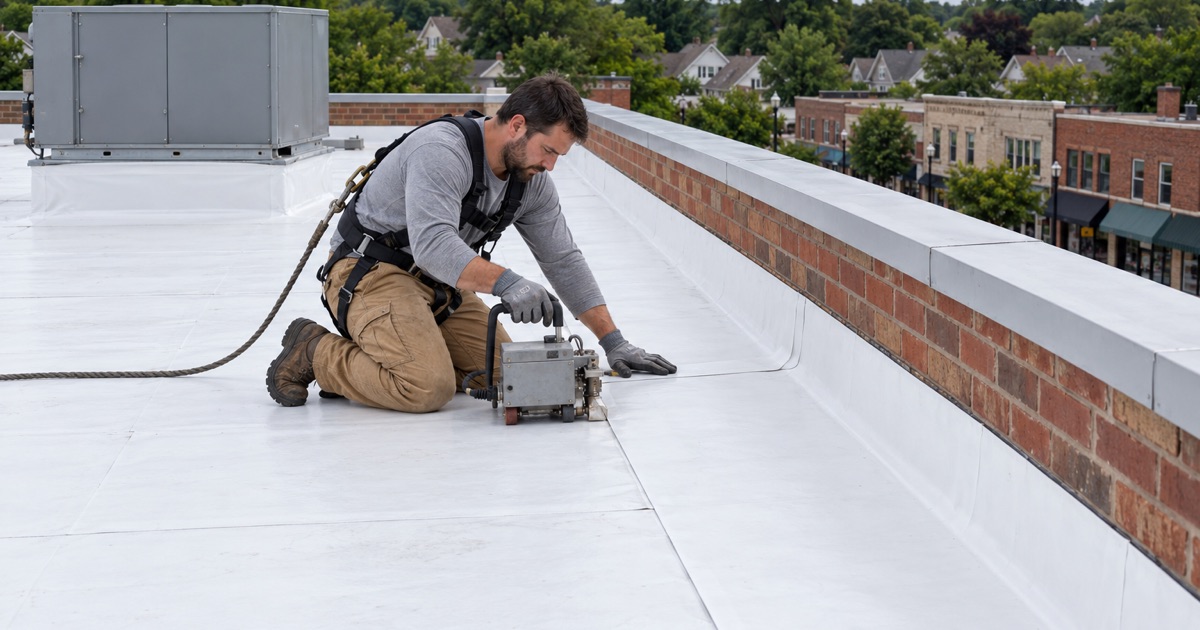
TPO is a white or light-colored single-ply membrane with heat-welded seams. Its reflective surface keeps the roof cooler in summer, which helps buildings with rooftop air conditioning and top-floor tenants.
We install TPO mechanically fastened or fully adhered over new insulation, with heat-welded seams checked along every run. Flashing at walls, curbs and penetrations is made from the same membrane, so the whole roof is one continuous system.
EPDM Rubber Roofing
EPDM is a durable black rubber membrane that has protected flat roofs for decades. It handles temperature swings well and suits simple roof shapes with few penetrations.
We install EPDM in large sheets to minimize seams, using seam tape and proper primers at every lap. Repairs to existing EPDM roofs are matched with compatible materials so the patch bonds rather than peels.
Torch-Down and Modified Bitumen
SBS and APP modified bitumen roofs are built in layers, with a granulated or coated cap sheet on top. They resist foot traffic and punctures well, which makes them a good choice for roofs with frequent equipment service.
We install modified bitumen by torch, cold adhesive or self-adhered methods depending on the building and its fire safety requirements. Each method is chosen for the specific roof rather than out of habit.
Commercial Roof Repair
Seams, Blisters and Punctures
Most commercial leaks begin at a lap that has opened, a blister that has split, or a puncture from dropped tools or foot traffic. Water then travels across the deck and appears inside far from the source.
We locate the actual opening, probe the surrounding area for wet insulation, and repair it with matched material. Where insulation is saturated, we cut it out and replace it, because a patch over wet insulation does not last.
Drains, Scuppers and Ponding Water
Water that does not drain finds every weak seam. Clogged drains, undersized scuppers and low spots that hold water for days after rain all shorten a roof’s life.
We clear and reflash drains and scuppers, and where ponding is chronic we discuss tapered insulation or added drainage during the next replacement. Good drainage is cheaper than repeated repairs.
Parapets, Coping and Edge Metal
Parapet walls and roof edges take the most wind and movement on a commercial building. Coping joints open, edge metal loosens, and wall flashing cracks where it turns up the masonry.
We rebuild parapet flashing, reset or replace coping and edge metal, and seal joints properly. These details account for a large share of commercial roof leaks and are often overlooked in quick repairs.
Commercial Roof Replacement
Tear-Off or Recover
Building code limits how many roofs can be stacked, and a recover is only sensible over dry insulation and a sound deck. We probe the roof and cut test openings to see what is underneath before recommending either approach.
When a full tear-off is needed, we remove everything to the deck, repair damaged decking, and install new insulation and membrane. The proposal explains which route we recommend and why.
Insulation and Energy Performance
A commercial re-roof is the best time to improve insulation, since the roof is already open. New rigid insulation boards reduce heating and cooling costs and can be tapered to correct drainage.
We specify insulation thickness and type in the proposal, so owners can see what they are paying for and how it affects the building’s performance. The membrane is only as good as what is beneath it.
Working Around Tenants and Business Hours
A commercial roof replacement happens above people who are working, shopping or living in the building. Noise, odors from adhesives, deliveries and dumpster placement all need planning.
We coordinate schedules with owners and tenants, protect entrances and walkways, and keep the roof watertight at the end of every day. Phased work lets businesses stay open while the roof is replaced section by section.
Churches, Schools and Older Masonry Buildings
Older institutional buildings often combine steep slate or shingle sections with flat roofs hidden behind parapets, plus built-in gutters and tall masonry walls. Each part needs a different material and a different crew skill.
We inspect the whole building before quoting, so the low-slope work, the flashing up the masonry and any steep-roof repairs are planned together. Phasing the work by section often fits a congregation’s or board’s budget better than a single large project.
Inspections and Paperwork for Building Owners
Scheduled Roof Inspections
A spring and fall inspection catches storm damage, clogged drains and opening seams before they reach the interior. Each visit produces a dated report with photos and a list of recommended repairs.
That record helps owners plan replacement years ahead and supports insurance or warranty questions. It also helps when a property is sold or refinanced and the roof’s condition is questioned.
Permits for Commercial Roof Work
Abington Township requires roofing permits for all roof and siding work, and its commercial forms note that roofing and siding permits are separate. Other townships set their own requirements for commercial buildings.
We confirm the rule for the property, file the permit, and schedule inspections as required. Owners receive a job file with the permit record, photos and material information when the work is complete.
- 20+ Years in Roofing
- Free Written Estimates
- Line-by-Line Scopes