Abington Superior Roofing provides emergency roof repair in Abington, PA when water is coming in and cannot wait, serving surrounding cities including Lower Moreland, Upper Southampton, East Goshen, Warwick Township and Plymouth Township. After more than 20 years of storm calls in this area, we know the first goal is simple: stop the water safely, then plan the real repair.
Emergencies here usually follow a windstorm, a summer thunderstorm, a heavy snow and ice event, or a tree limb coming down. The damage ranges from a few missing shingles to an open hole in the roof, and the response depends on what is safe to do in the conditions.
We secure the roof with tarps or temporary repairs, photograph the damage for your own records and any claim, and come back for a permanent repair once the roof is dry. You get a clear account of what happened and what it will take to fix it properly.
What Counts as a Roofing Emergency
Active Leaks During a Storm
Water dripping through a ceiling, running down a wall or pooling in an attic is the most common emergency call we receive. Every hour it continues, it soaks insulation, stains drywall and can reach electrical wiring.
We come out as soon as conditions allow, find the area where water is entering, and cover it. If the rain is still falling, the priority is to stop the water, and the investigation into exactly what failed follows once the storm passes.
Wind Damage and Missing Shingles
High winds peel shingles off ridges, rakes and corners, exposing the underlayment or bare decking below. Once a section is open, the next rain goes straight into the house.
We cover exposed areas and, when the weather allows, replace the missing shingles the same visit. We also check the surrounding shingles for broken seals, because wind damage is often wider than the bare patch visible from the ground.
Fallen Trees and Limbs
A limb through the roof can break rafters and decking as well as shingles, which makes it a structural problem as well as a leak. The weight still resting on the roof can shift and cause more damage.
We work with a tree service to remove the load safely, then cover the opening and assess the framing. If rafters or decking are broken, we explain the structural repair needed before the roofing can be finished.
Ice Dams and Winter Leaks
In winter, ice building up at the eaves can force meltwater under shingles and into walls and ceilings. These leaks often appear during a thaw, days after the snow fell.
We remove ice dams carefully to open a drainage path, without chopping at the shingles, and address the leak inside. Afterward we look at insulation, ventilation and the eave underlayment so the problem does not return each winter.
How We Stop the Water
Tarping a Damaged Roof
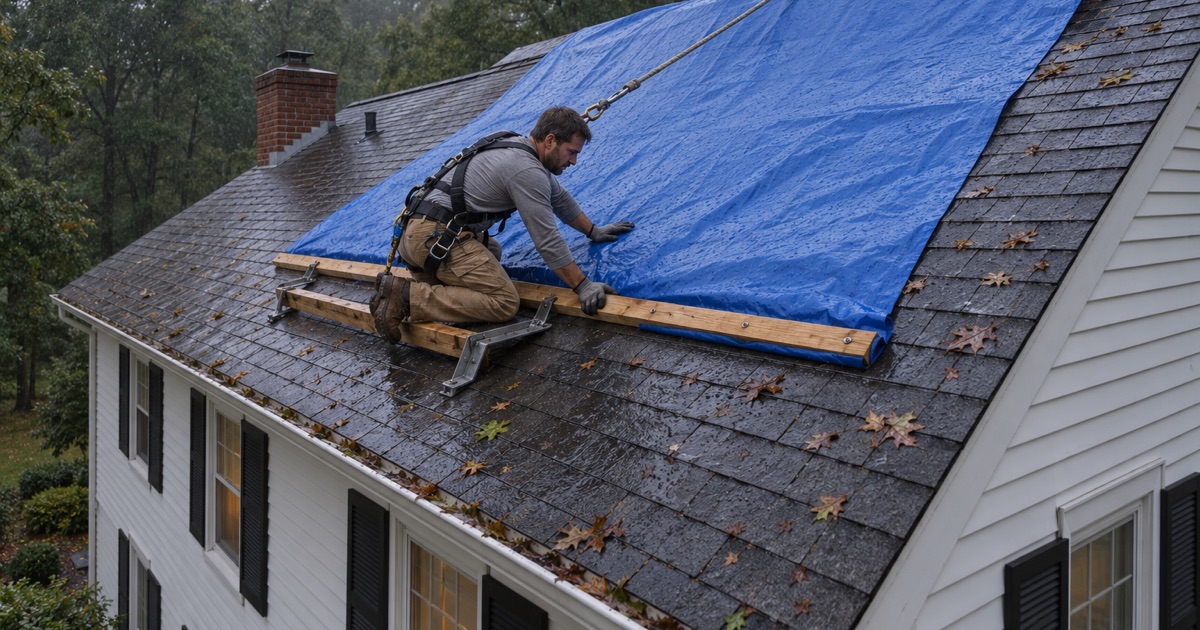
A tarp only works if it is secured properly. We extend it over the ridge where possible, fasten it with battens rather than loose nails, and lap it so water runs over it instead of under it.
A well-installed tarp can protect the house for weeks if materials or weather delay the permanent work. A poorly installed one blows off in the next gust and leaves the roof worse than before.
Temporary Flashing and Shingle Repairs
Some emergencies come from a single failed detail, such as a pipe boot torn loose or chimney flashing lifted by wind. These can often be closed with a temporary repair that is more secure than a tarp.
We make the temporary repair, note what failed, and schedule the permanent fix. Temporary repairs are always labeled as such, so no one mistakes them for finished work.
Working Safely in Bad Conditions
Wet, icy and storm-damaged roofs are dangerous, and some conditions make it unsafe to climb at all. In those cases we protect the interior and wait for a safe window rather than putting a crew on a roof in lightning or high wind.
Our crews use fall protection on every roof, as federal rules require for residential roofing at 6 feet and above. Getting the water stopped matters, and getting everyone home safely matters more.
After the Emergency
Photos and Notes for Your Claim
We photograph the damage before and after tarping and write a short description of what happened and what we found. Those records help if you file an insurance claim and when you sit down with an adjuster.
We can meet your adjuster on site when you ask. We do not negotiate or interpret your claim, which in Pennsylvania only you, your insurer or a licensed public adjuster may do.
Emergency Permits and Follow-Up Paperwork
Pennsylvania’s Uniform Construction Code allows emergency repairs to be made without first applying for a permit, with the application following within a few business days. Townships handle the details differently.
We check what your township requires and take care of the follow-up application, so the emergency work and the permanent repair are both properly recorded. In Abington Township, where roof work needs a permit, that step is never skipped.
The Permanent Repair
Once the roof is dry, we inspect the damaged area fully, including the attic, decking and flashing. Then we give you a written scope for the permanent repair, with any damaged decking photographed and priced.
If the storm damage is extensive or the roof was already near the end of its life, we explain whether repair or replacement makes more sense. That conversation happens after the emergency, not in the middle of it.
Drying Out the Attic and Interior
Wet insulation holds moisture against the ceiling and the framing long after the leak stops. Left in place, it can lead to mold and stained drywall weeks later.
We tell you what we see in the attic, including insulation that should be pulled and replaced. For interior drying and drywall work, we point you to the right trades so nothing is left damp behind a closed ceiling.
- 20+ Years in Roofing
- Free Written Estimates
- Line-by-Line Scopes